

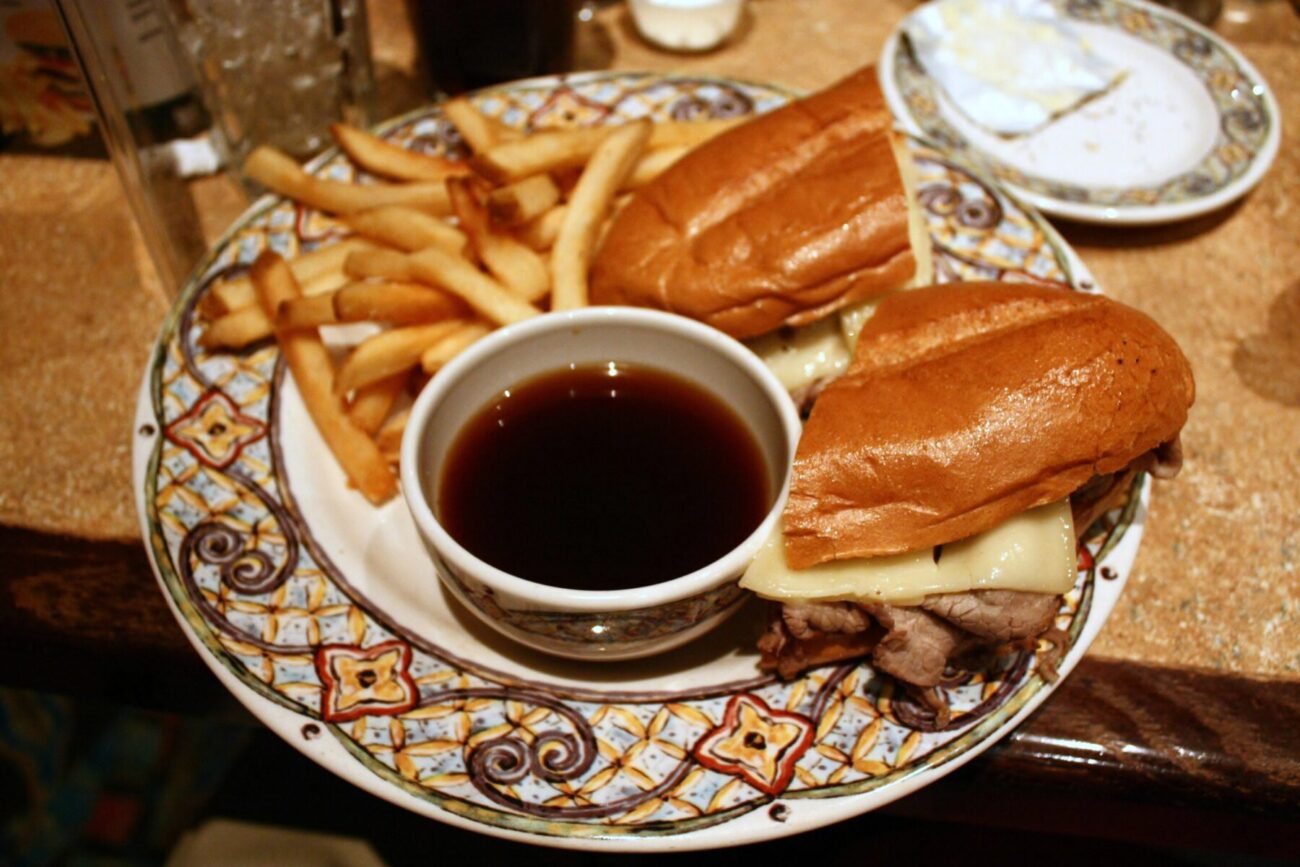
Daily lines snake around Salt Hank’s Greenwich Village storefront, smartphones capturing every angle as diners wait for what TikTok has crowned New York’s most photographed sandwich. The French dip—a century-old Los Angeles creation—has somehow become Manhattan’s hottest food obsession, transforming from humble diner fare into Instagram-worthy accessible luxury, unlike many forgotten sandwiches that failed to endure.
From LA Accident to NYC Phenomenon
The French dip’s origin story reads like food folklore. Created between 1908 and 1918 at either Philippe’s or Cole’s in Los Angeles (both claim invention, though Philippe’s has stronger documentation), the sandwich emerged when a customer with sore gums requested softened bread dipped in meat drippings. What started as accommodation became signature.
Now Henry Laporte—the 30-year-old TikTok sensation known as Salt Hank—has sparked a citywide renaissance. His version features Pat LaFrieda prime rib, 12-hour caramelized onions, and housemade beef jus on Frenchette’s demi-baguettes. The result? Millions of followers and social media mentions spiking 70% month-over-month, according to food writer Andrea Strong.
Manhattan’s Premium Playground
The trend spans Manhattan’s dining spectrum:
- Anton’s serves rare roast beef on sesame baguettes ($26)
- Corner Store’s 72-hour dry-aged wagyu version ($38.95) became their headline seller in Soho
- Gui pushes boundaries with 24-hour koji-cured prime rib and horseradish-yuzu cream ($29)
- Minetta Tavern keeps it classic with pink steak and soft crusty rolls
These aren’t your grandfather’s French dips. Chefs with Thomas Keller pedigrees craft elaborate preparations—some cure meat for days, others develop signature jus recipes. The sandwich has evolved into what the industry calls “premium comfort”: high-end ingredients and technique packaged as recognizable comfort food.
Cultural Currency in the Digital Age
The French dip revival reflects broader cultural shifts. Nostalgia meets maximalism as chefs elevate humble classics into social media moments. Data shows French dips appearing on 25% more upscale NYC menus over four years—turning diner staples into destination dining, much like how theme restaurants created memorable experiences.
This transformation mirrors how food culture operates in 2024: influencer-driven, visually optimized, and rooted in indulgent comfort. The French dip succeeded because it photographs beautifully, satisfies cravings, and carries enough culinary credibility for serious chefs to reimagine without embarrassment, similar to other comfort food revivals.
Manhattan’s French dip boom proves that in today’s food landscape, any dish—no matter how traditional—can become cultural currency with the right combination of chef innovation and social media amplification.