

Heritage brands chasing viral trends usually end badly—think McDonald’s pink sauce or Wendy’s breakfast pizza. But Ghirardelli’s calculated leap into Dubai chocolate territory suggests something different: a 170-year-old San Francisco institution that actually understands the assignment.
Premium Pricing Meets Viral Demand
Limited online launch creates scarcity before November retail expansion.
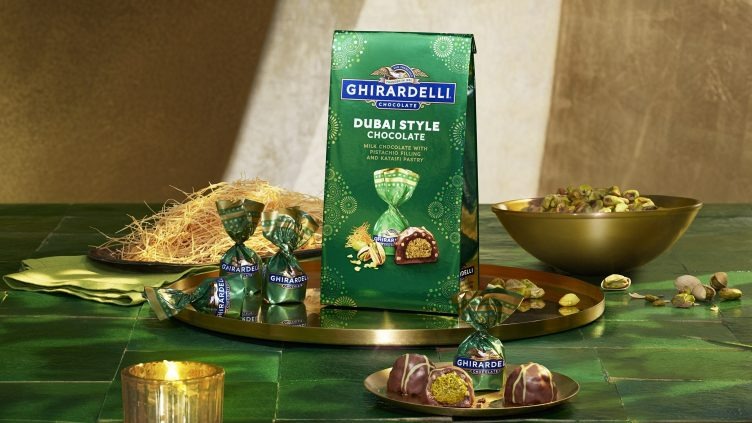
The company launched its Dubai Style Chocolate exclusively on Ghirardelli.com October 14, commanding premium prices that would make luxury brands blush. Each bite-sized praline wraps pistachio filling and crispy kataifi in the company’s signature milk chocolate shell—a textural playground that mirrors the viral sensation.
According to Bobby Oliver, Vice President of Marketing at Ghirardelli, “Each bite of our Dubai Style Chocolate features a smooth milk chocolate shell with an added layer of crispy texture, encasing a luscious pistachio filling layered with finely shredded kataifi.”
The strategic product lineup demonstrates careful market positioning:
- 4-ounce bags retail for $13.95 (roughly $56 per pound)
- 50-count gift boxes command $75
- Bulk 260-piece cases target commercial buyers, with November expansion planned for physical retail locations nationwide
From Viral Stunt to Strategic Bet
Previous sundae success proves Dubai chocolate transcended fleeting trend status.
This wasn’t impulse decision-making. Ghirardelli tested the waters with Dubai Style Chocolate Sundaes that sold out within hours in San Francisco and New York, creating lines that stretched down city blocks. The company rolled those sundaes nationwide in September before committing to packaged retail products.
The strategic sequencing reveals sophisticated trend analysis. Dubai chocolate has evolved beyond social media novelty into what industry observers now classify as a “modern dessert classic”—the kind of staying power that justifies premium ingredient sourcing and manufacturing line adjustments.
Unlike artisanal competitors scrambling to source chocolate shells, Ghirardelli’s bean-to-bar control offers genuine competitive advantages. The company can adjust proprietary formulations and maintain quality standards that smaller producers can’t match at scale.
You’re witnessing heritage brand evolution in real time—not desperate trend-chasing, but calculated cultural engagement that leverages manufacturing strengths while respecting viral food culture’s lightning-fast cycles. This move signals how traditional food companies can successfully adapt to social media-driven trends without sacrificing their premium positioning.