

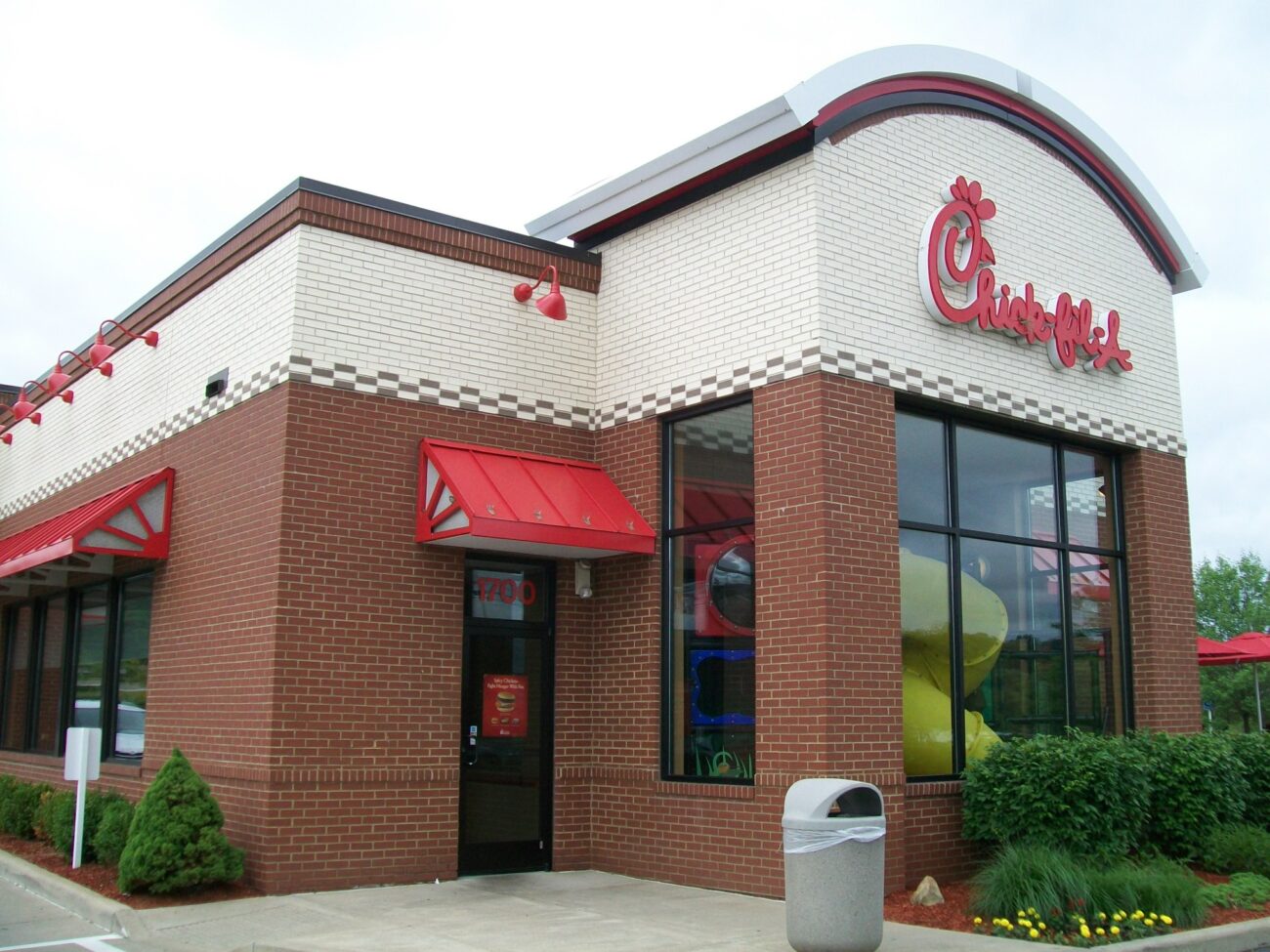
The chicken sandwich empire just abandoned its famous face-to-face service for cold, hard automation. Chick-fil-A’s inaugural 24-hour vending machine at Children’s Hospital of Georgia marks the chain’s first experiment with completely human-free food service—a significant departure for a brand built on Southern hospitality.
Hospital Hunger Gets High-Tech Treatment
The machine operates around the clock except Sundays, maintaining the company’s 78-year tradition of weekly closure. Hospital staff, patient families, and visitors can now grab Chick-fil-A items during those brutal 3 AM hunger pangs when the cafeteria’s closed and traditional vending machine snacks feel particularly uninspiring.
The selection stays lean: two wrap varieties and two chip flavors, priced between $2.19 and $8.49. You won’t find the signature chicken sandwich or waffle fries—just the Chick-fil-A Cool Wrap with Avocado Lime Ranch and Southwest Veggie Wrap with Creamy Salsa, plus Original and Chick-fil-A Sauce Flavored Waffle Potato Chips.
Fast Food’s Automation Arms Race Accelerates
This pilot positions Chick-fil-A within fast food’s broader automation revolution, though their approach feels distinctly old-school compared to flashier competitors. Chipotle’s testing drone delivery while Starbucks deploys AI systems called “Deep Brew” to predict orders and optimize labor. Chick-fil-A went with something your grandparents would recognize—a really fancy vending machine.
Healthcare facilities need 24-hour food access for shift workers and anxious families camping in waiting rooms, but traditional restaurants can’t justify the economics. “The vending machine seeks to provide a convenient option for hospital employees and visitors on the go,” according to a Chick-fil-A spokesperson.
This model could unlock institutional expansion without the real estate costs and labor complexity of full restaurants. Universities, airports, and corporate campuses represent massive untapped markets where Chick-fil-A’s traditional format wouldn’t work but automated brand presence might thrive.
Brand Identity Meets Automation Reality
The chain’s betting that brand recognition trumps personal service in certain contexts—a strategic gamble that tests whether the “Chick-fil-A experience” can survive without human interaction. Augusta’s robot experiment will determine whether convenience can compensate for the absence of those signature courteous exchanges that have defined the brand for decades.