

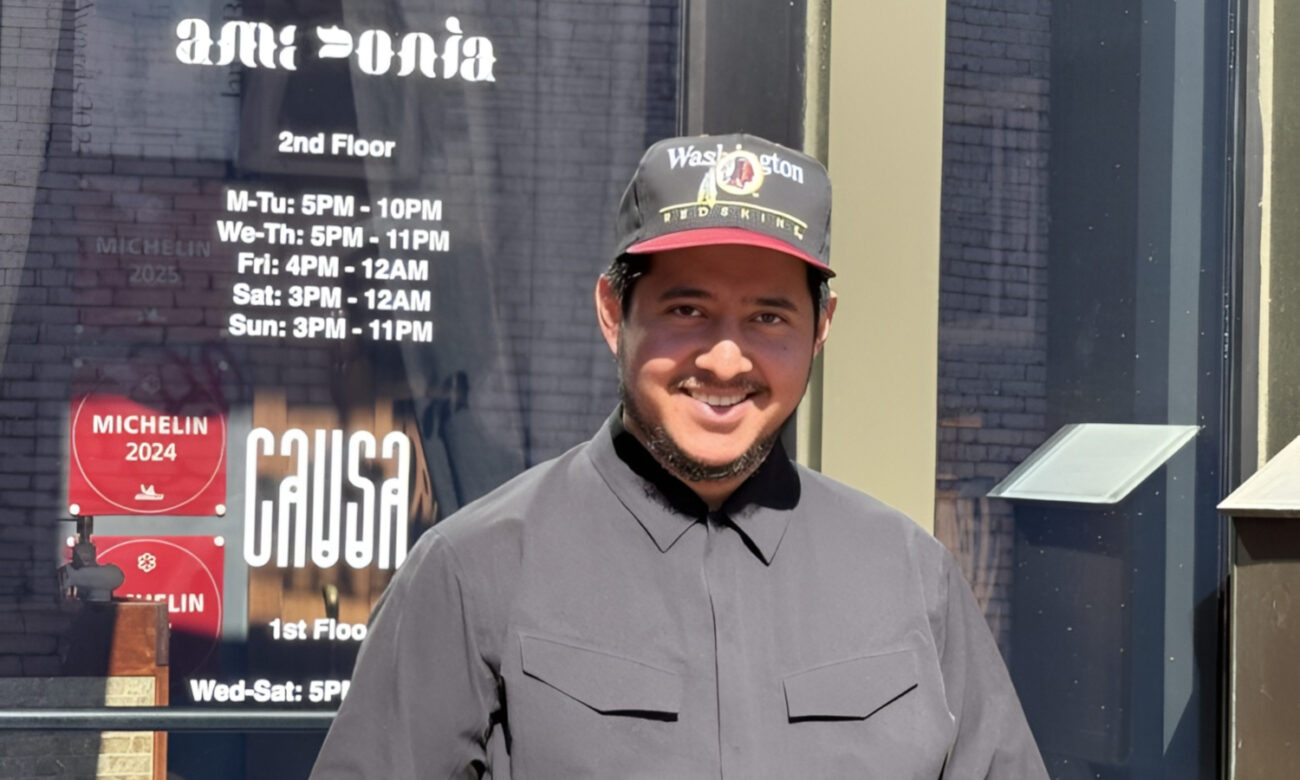
Most D.C. diners encounter Peruvian food through one dish. It spins on a rotisserie, it’s delicious, and it represents Peruvian cuisine about as fully as a single dish can represent any country’s entire culinary tradition. Carlos Delgado — Lima-born, shaped by his grandmother‘s kitchen, and now the chef behind Michelin-starred Causa, the Michelin Guide’s 2024 Young Chef Award, and the 2025 James Beard Award for Best Chef: Mid-Atlantic — wants to change that. His two restaurants at 920 Blagden Alley NW make the case.
- Causa holds a Michelin star and ranked No. 1 on Washingtonian’s 2024 list of the area’s 100 Very Best Restaurants
- Delgado’s James Beard win was D.C.’s only award in 2025
- Causa and Amazonia opened in May 2022 after roughly three and a half years of development
- Amazonia operates as Causa’s upstairs companion — bar, dining room, rooftop, pisco-forward cocktail program
- Delgado also leads Maru San, a Peruvian-Japanese handroll concept on Capitol Hill
A Cuisine Built From Arrivals
Delgado frames Peru not as a fixed culinary tradition but as a country that keeps absorbing the cultures around it.
Chinese and Japanese immigration in the 1800s left a lasting mark on Peruvian kitchens, shaping everything from technique to ingredient combinations. More recently, Venezuelan communities have added another layer to that evolving story. Delgado has described Peru as a melting pot of cultures, according to WTOP, and his goal is direct: help diners build genuine familiarity across the full Peruvian menu — not just one reference point.
That means anticuchos — beef heart skewers grilled over charcoal, fragrant and faintly smoky — alongside ceviche and criollo dishes rooted in coastal tradition. It also means macambo, an Amazonian fruit related to cacao, which Delgado processes with sugar and cocoa butter to produce something that closely resembles white chocolate. The result lands somewhere between familiar and unexpected — approachable enough to draw curiosity, distinct enough to stay with you.
Cooking With Conviction
For younger chefs considering the U.S. market, Delgado’s reported message is clear: cook from your own culture and resist the urge to soften it.
According to WTOP, Delgado encourages emerging chefs to accept the risks of entrepreneurship and represent their own backgrounds without compromise. That philosophy has its clearest expression in Causa itself — a Lima-born chef, rooted in his grandmother’s cooking, running a culturally rooted tasting experience in the U.S. capital.
If your experience with Peruvian food stops at a neighborhood rotisserie spot, Causa and Amazonia at Blagden Alley are a logical next step. Reservations at both are available through the restaurant’s official website.