

Frenchmen Street is where you go to stumble into something good. These four venues are where you go when you already know what you’re looking for. They sit further afield, draw mostly locals, and each one is tied to a specific chapter of New Orleans music history.
Maple Leaf Bar – 8316 Oak St., Carrollton
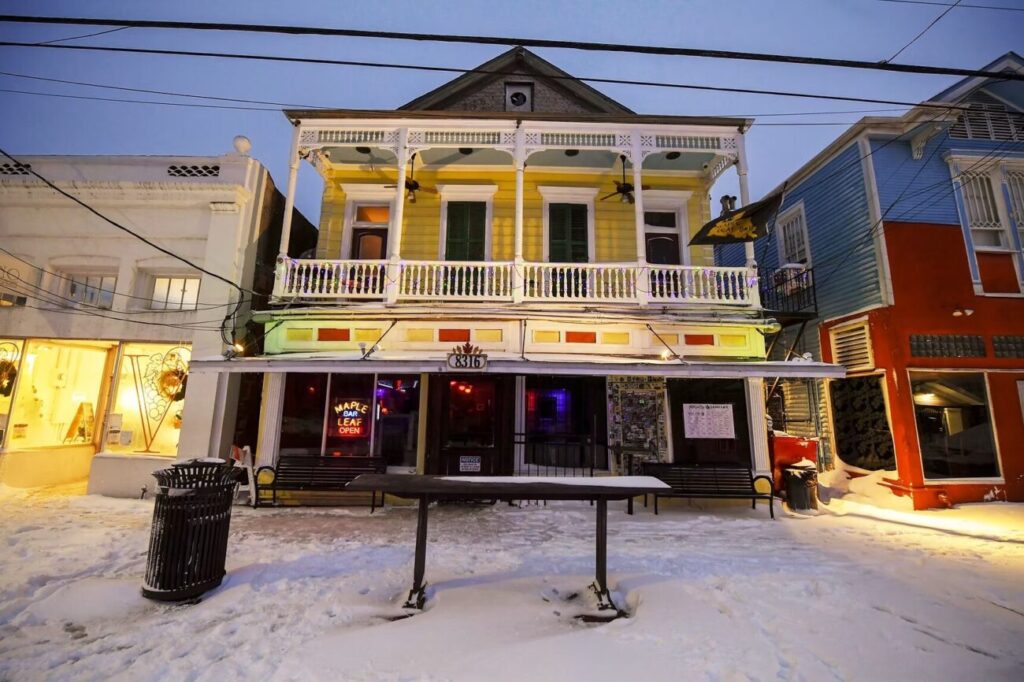
The Maple Leaf opened on February 24, 1974, making it one of the longest continuously operating live music clubs in the city. The first night featured Andrew Hall’s Society Jazz Band, who held a Saturday residency there for seven years. The building used to house a small laundromat inside the bar — it shows up thinly disguised in an Ellen Gilchrist short story as “The Raintree Street Bar and Washerteria.” The Everette C. Maddox Memorial Prose & Poetry Reading, held every Sunday in the courtyard, has been running long enough to claim the title of the longest continuously running poetry reading in North America.
The reason most visitors make the trip is Tuesday night. Grammy-winning Rebirth Brass Band has held a weekly residency here since 1991, turning what is otherwise an ordinary weekday into a full-contact New Orleans experience. The room packs tight, the band plays without a setlist, and the crowd ranges from Uptown regulars to people who planned their entire trip around the gig. During his 2015 speech marking the tenth anniversary of Katrina, President Obama joked that maybe after leaving office he would “finally hear Rebirth at Maple Leaf on Tuesday night.” Doors at 10 p.m., $20 cover. Arrive early or expect a line. Check mapleleafbar.com for the full weekly calendar.
Tipitina’s – 501 Napoleon Ave., Uptown
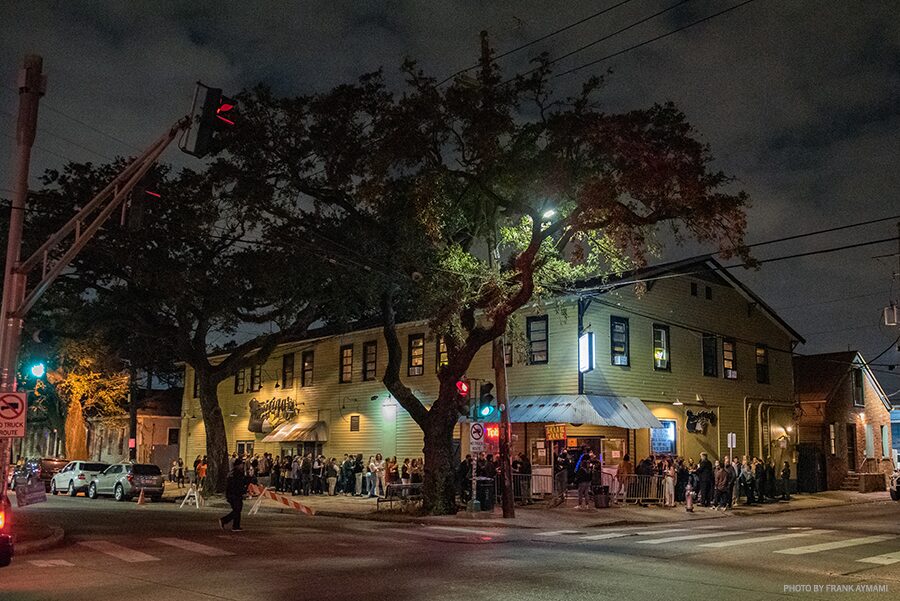
The building at the corner of Napoleon and Tchoupitoulas has been a gambling house, a gymnasium, and a brothel. In January 1977, fourteen local investors — mostly Tulane students and alumni who called themselves the “Fabulous Fo’teen” — pooled $14,000 to renovate it into a music club specifically to give Professor Longhair a regular place to play in his final years. They named it after his 1953 song “Tipitina.” The early venue had no liquor license, so they ran a juice bar and handed out free bananas with paid entry. A banana in an outstretched hand became the logo.
Professor Longhair performed there regularly until his death in January 1980. His bronze bust still greets guests at the door, and his face watches the room from a mural above the stage. WWOZ, the city’s community jazz and heritage radio station, began broadcasting in December 1980 from apartments above the club, dropping a microphone through a hole in the floor to carry live sets. The Neville Brothers, Dr. John, The Meters, and Galactic all built significant parts of their reputations on the Tipitina’s stage. In December 2018, Galactic bought the club outright and formed the Tip-It Foundation to carry its cultural mission forward. Visit tipitinas.com for shows.
Snug Harbor Jazz Bistro – 626 Frenchmen St., Marigny
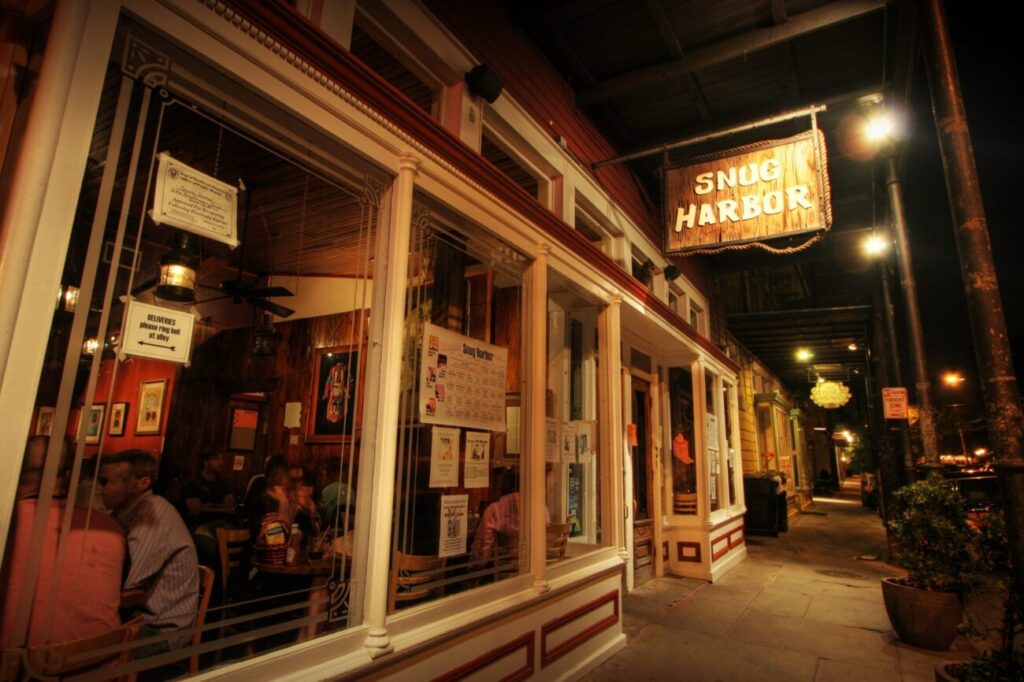
Snug Harbor sits on Frenchmen Street but operates on entirely different terms from the bars around it. It is a seated, ticketed listening room inside a renovated 1800s storefront, with reserved shows at 7:30 and 9:30 p.m. and a full Creole dining room on the ground floor. The New York Times has called it the classiest jazz club in New Orleans. Rolling Stone named it a musical landmark. The room holds about 100 people and feels half that size.
Glenn Menish founded it in 1983. For more than 30 years after that, Ellis Marsalis — pianist, educator, patriarch of the most important family in modern New Orleans jazz — held a Friday night residency here that became one of the fixed points of the city’s musical calendar. He retired in December 2019 and died of COVID-19 complications four months later at 85. His son Jason Marsalis now carries that lineage forward at the club, and Delfeayo Marsalis holds a regular Wednesday slot. Charmaine Neville, daughter of Charles Neville of the Neville Brothers, has a long-running Monday residency. Book tickets in advance at snugjazz.com; the room sells out.
Kermit’s Treme Mother-in-Law Lounge— 1500 N. Claiborne Ave., 7th Ward
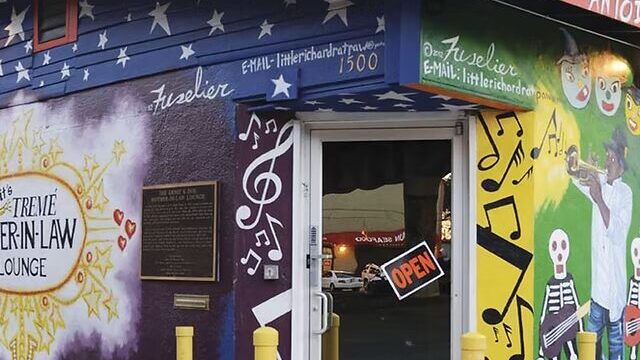
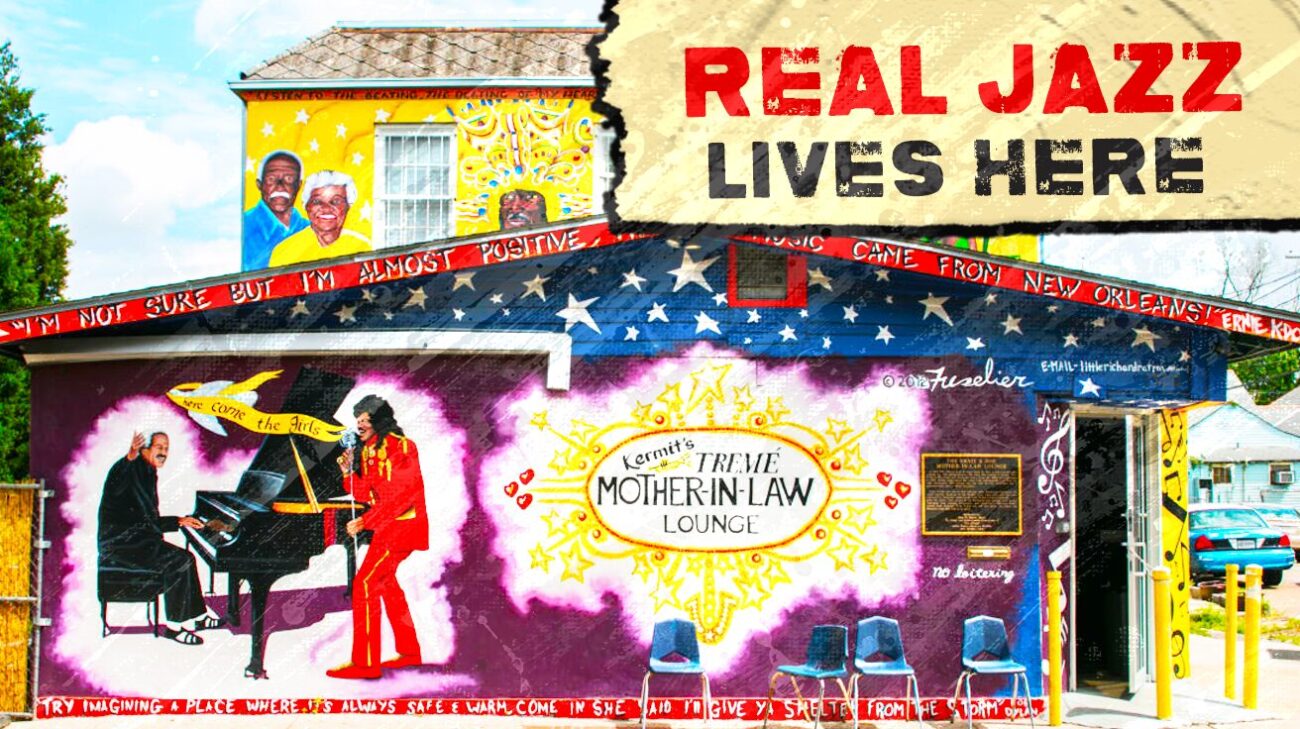
In 1961, R&B singer Ernie K-Doe recorded “Mother-in-Law,” a comedic complaint about overbearing in-laws that went to number one nationally and became one of the defining records of New Orleans R&B. Thirty-three years later, K-Doe opened a bar named after it at 1500 North Claiborne Avenue in the Treme, decorated floor to ceiling with memorabilia from his career, a life-size wax figure of himself, and brightly painted murals covering the entire exterior. K-Doe called himself the “Emperor of the Universe” without apparent irony, and the lounge reflected his personality completely.
K-Doe died in 2001. His widow Antoinette ran the bar until she passed away on Mardi Gras Day 2009. The lounge had also taken five and a half feet of floodwater during Katrina in 2005 and been rebuilt with volunteer help in time to reopen on the storm’s first anniversary in 2006. In 2014, trumpeter Kermit Ruffins — one of the founding members of Rebirth Brass Band, and by then one of the most beloved figures in New Orleans music — reopened it as Kermit’s Treme Mother-in-Law Lounge. He stepped back from day-to-day management in May 2025 but remains the owner and still performs there on Saturdays with the Barbecue Swingers, sometimes grilling for the crowd from a barbecue rig parked outside. It is one of the few remaining Black-owned music venues in the city. Check kermitslounge.com for the current schedule before you go.