

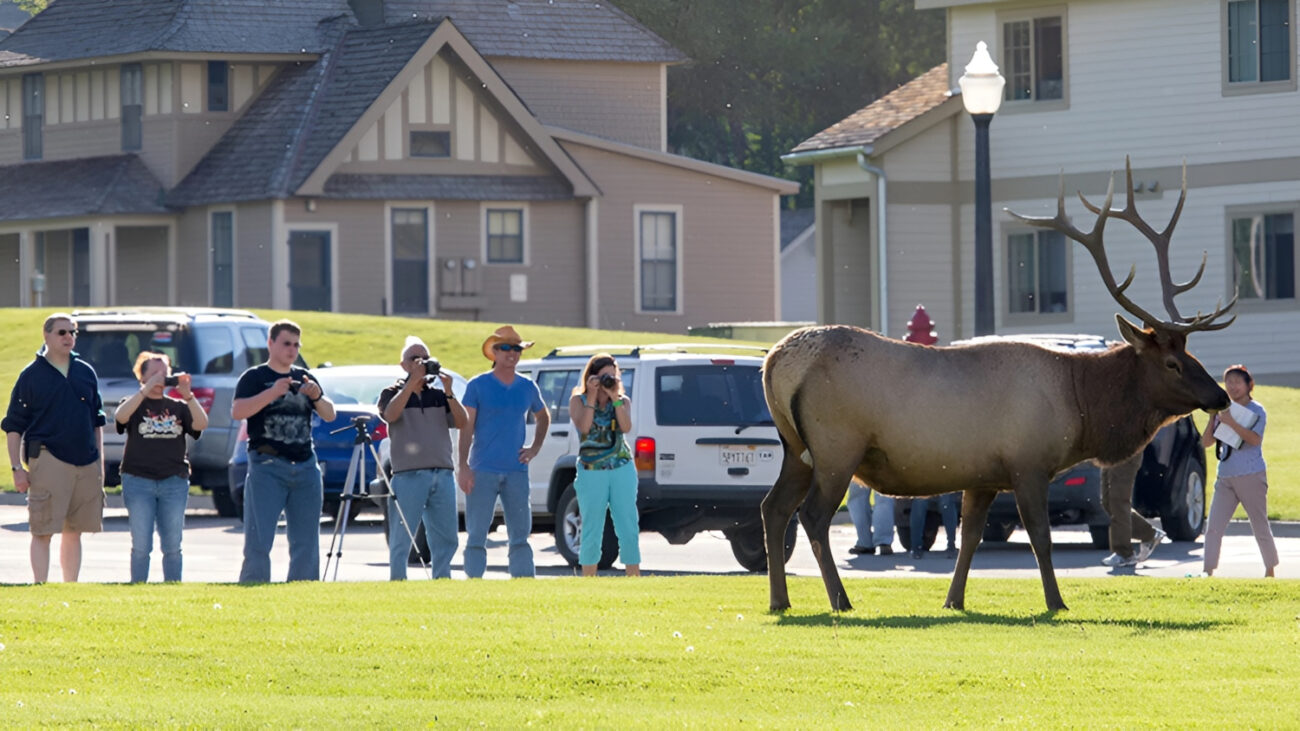
A bison grazes near a roadside pull-off at Yellowstone National Park. NPS guidelines require visitors to remain at least 25 yards from bison or elk, and 100 yards from bears, wolves, and cougars — distances that apply specifically to Yellowstone and may differ in other parks.
Peak summer in a national park looks peaceful right up until it doesn’t. Bison graze beside the road. An elk stands motionless in a meadow. A bear moves slowly through the brush. Everything looks calm — and that’s when visitors make the mistakes that lead to dangerous encounters with wildlife. Wild animals don’t telegraph danger the way movie villains do. They give subtle behavioral cues that are easy to miss when a perfect shot is within reach.
The 25-Yard Rule Exists for a Reason
Distance requirements aren’t suggestions — and a calm-looking animal isn’t necessarily a safe one.
Yellowstone requires at least 25 yards between visitors and bison or elk, and 100 yards from bears, wolves, and cougars. Great Smoky Mountains sets its bear minimum at 50 yards. These numbers aren’t arbitrary. According to the National Park Service, bison have injured more people in Yellowstone than any other animal — which says a great deal about how badly visitors misread “docile.”
The mistakes that cause most incidents:
- Assuming a calm bison or elk won’t charge
- Chasing the perfect shot instead of reading the animal’s body language
- Feeding squirrels, birds, or any other wildlife — feeding is prohibited in national parks and applies to small animals, not only bears
- Leaving food or trash accessible at campsites or trailheads
- Stopping in the road rather than a designated pull-off to watch roadside animals
NPS wildlife-watching guidance is direct on behavioral cues: if an animal changes its behavior because of your presence, you are already too close. Back away slowly. Do not follow.
Your Zoom Lens Is the Safest Wildlife Tool You Own
The best wildlife photograph you’ll ever take doesn’t require closing the distance.
When bison within 100 feet of a road, NPS guidance recommends staying in your vehicle and parking only in an established pull-off. If no pull-off is available, keep driving. Stopping mid-road to watch wildlife creates a hazardous traffic situation — the national park version of a fender-bender that happens to involve an animal weighing over a thousand pounds.
Binoculars and zoom lenses exist precisely so you don’t have to move closer, according to NPS wildlife-watching guidance. Use them. Check your destination park’s specific distance rules before arriving, because requirements vary by species and location.
Wild animals don’t owe anyone a photograph. The encounter goes well when visitors leave enough space for animals to behave as though no one was ever there.