

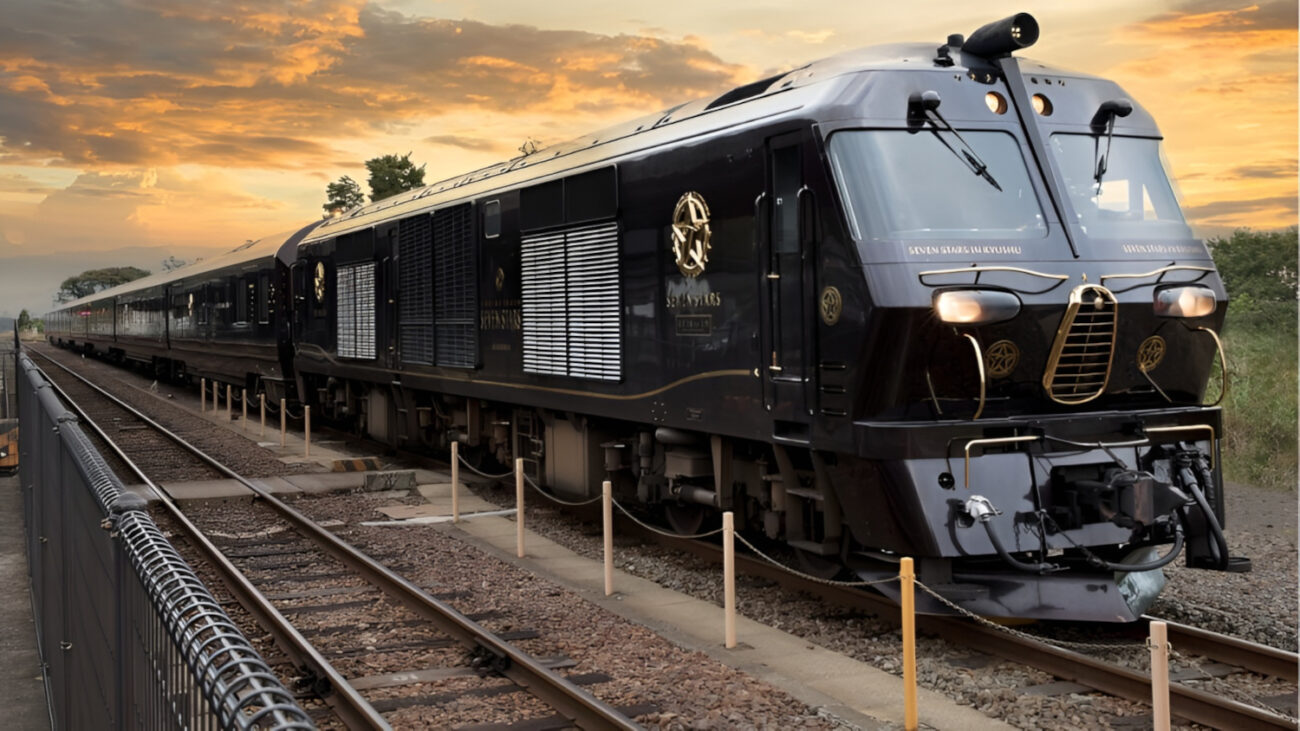
A steward places regional seafood in front of you as Kyushu’s coastline fills the window. Twenty passengers total. This is Seven Stars in Kyushu — launched by JR Kyushu in 2013, carrying just ten suites per journey, and so oversubscribed that a lottery determines who actually boards. Two-day journeys start at approximately $4,500 per person. What that fare buys isn’t simply accommodation on rails. It’s a moving portrait of an entire region, delivered slowly enough to actually absorb it.
Ten Suites, Seven Prefectures, No Rush
The train’s name is also its itinerary — a design philosophy built around Kyushu’s seven prefectures rather than the act of crossing them.
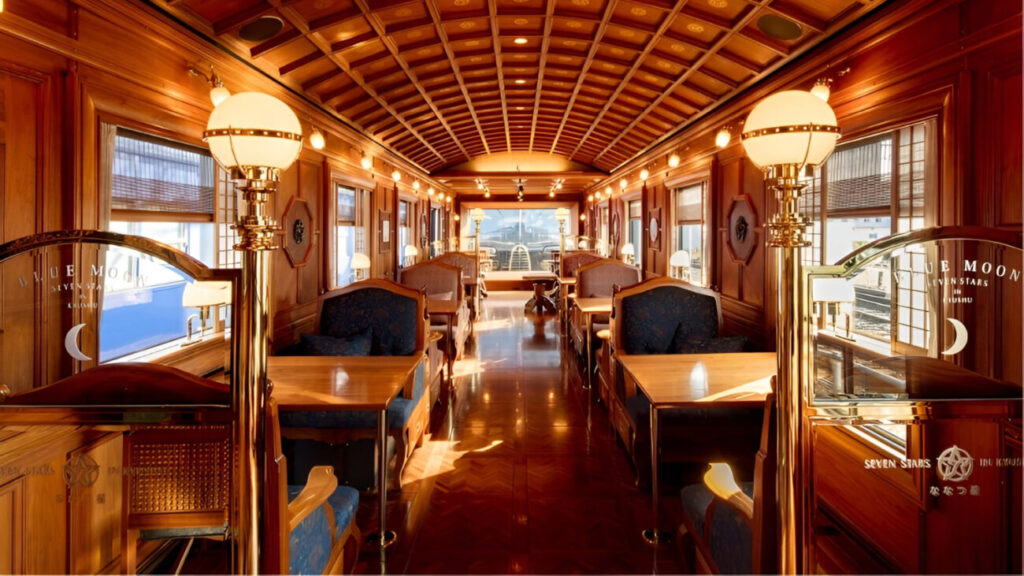
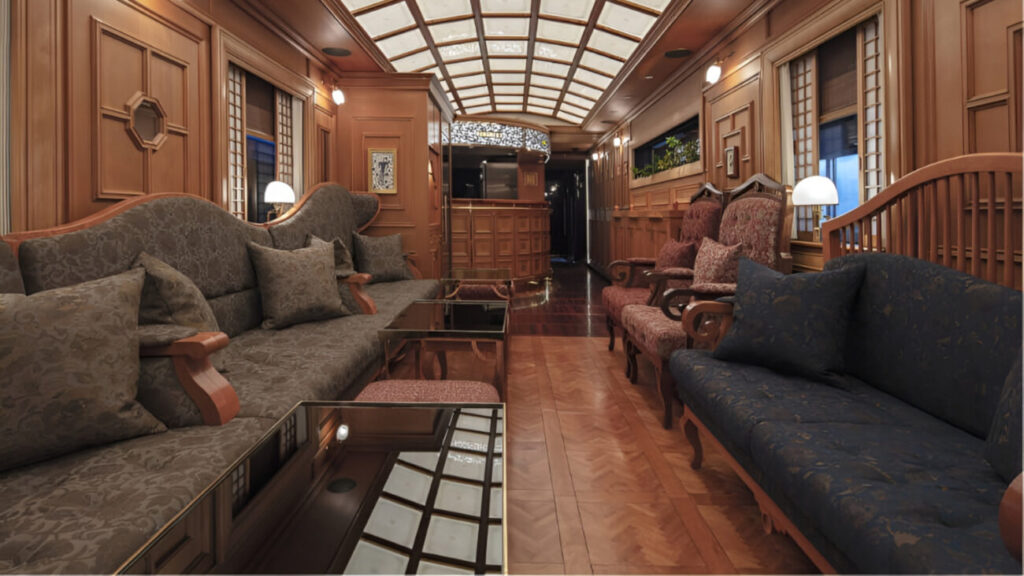
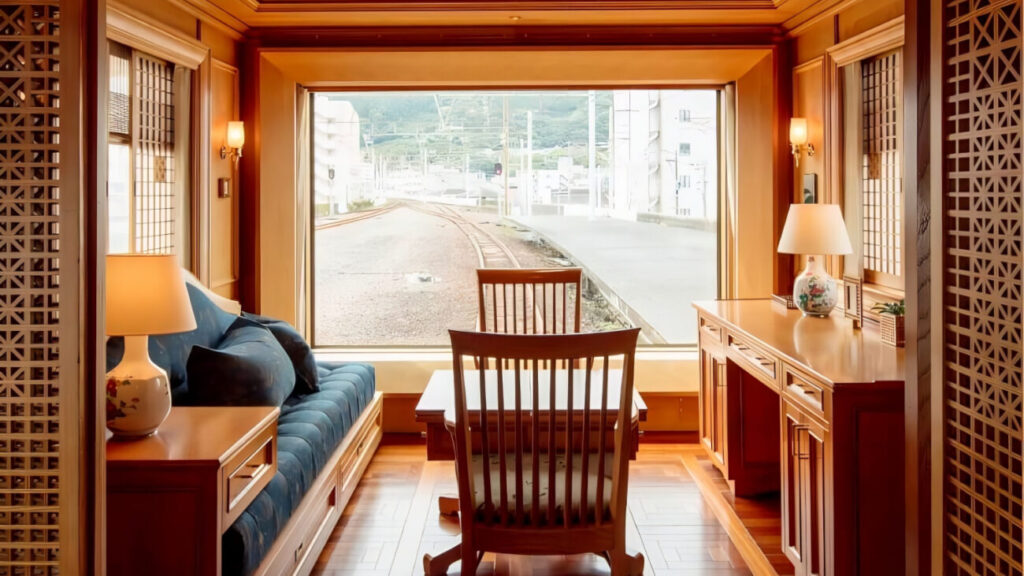
Seven Stars maps directly to Kyushu’s seven prefectures, and every design choice reinforces that logic. Walnut-lined suites, cypress wood, kumiko latticework, coffered ceilings, botanical textiles, handcrafted porcelain. A seven-sided washbasin by Sakaida Kakiemon XIV. The carriages have been described as a moving museum — a framing that holds when you consider the craft on display. A 2022 overhaul added dining and lounge space, according to Travel + Leisure. A two-day loop from Hakata through Kagoshima, Miyazaki, and Oita offers one entry point; longer itineraries incorporate ryokan stays at properties such as Sansou Murata and Yufuin Tamanoyu.
What the Fare Covers:
- Capacity: 10 suites, 20 passengers maximum per journey
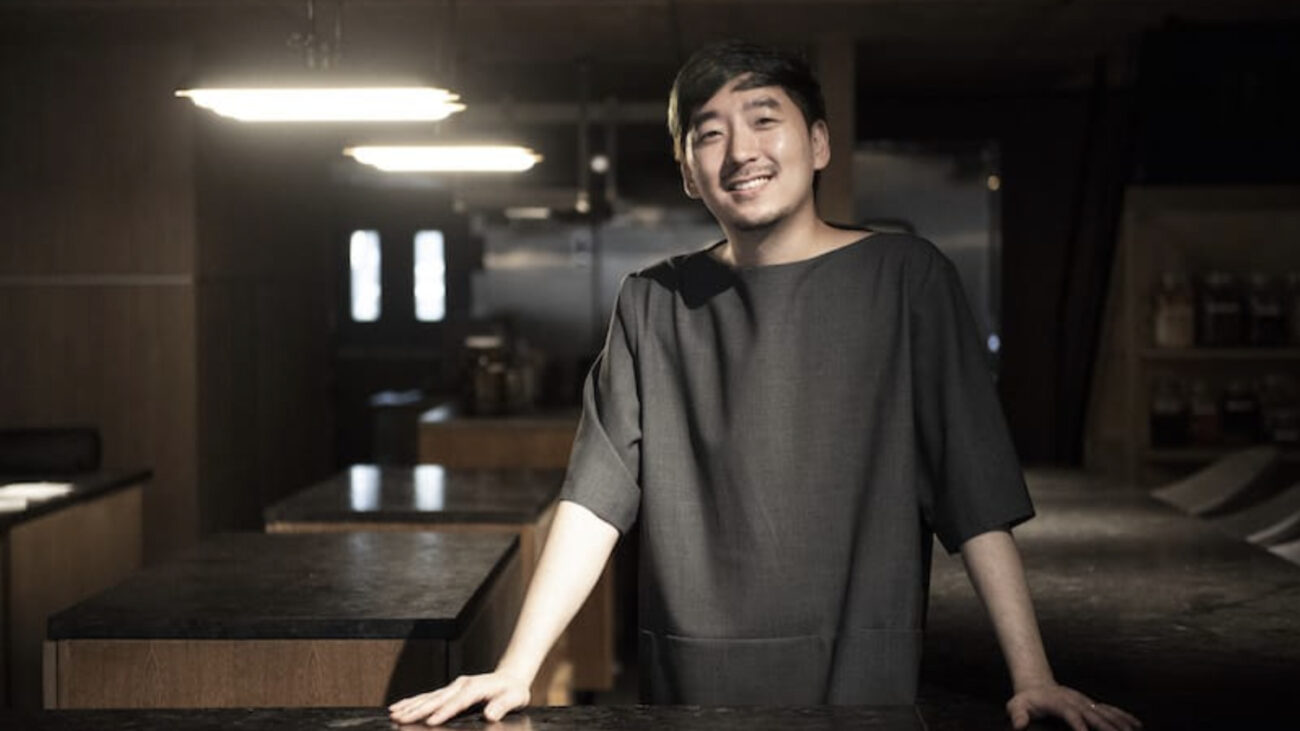
- Culinary program: Regional chefs reportedly board the train for select departures — sushi master Takuo Yamanaka of Fukuoka and chef Takashi Tashiro of Kagoshima’s Belle France have featured on reported journeys; participation varies by departure and should be confirmed in advance
- Pricing: Starts around $4,500 per person for a two-day journey; select suites on specific departures reach ¥950,000 per guest per official materials — treat all pricing as itinerary-specific
- Excursions: Stops may include Wakimoto Beach in Akune and Usuki’s Edo-period streetscapes, with encounters alongside local conservationists, artisans, and stone Buddhas carved into hillsides
- Booking: Application-based through the official Seven Stars website, with designated windows opening months before departure
The culinary program is the spine of the journey, not a supplemental perk. Hakata Bay seafood — sea bream, squid — reads like a coastal geography lesson. Kagoshima Wagyu, reportedly prepared with French-Japanese technique on select departures, places you firmly in the island’s south. Sake and shochu, included in the fare alongside meals and excursions, complete the regional picture.
Then there’s the Kaz Bar. Four seats. Premium Japanese whisky. Photography reportedly discouraged. It operates less like a hotel bar and more like an omakase counter — except what’s being served is atmosphere and discretion. This is where the incredible bars philosophy of omotenashi becomes tangible: attentive, anticipatory hospitality in which stewards coordinate excursions and serve meals in suites without waiting to be asked twice. Not a shorthand for politeness — something considerably more considered than that.
Getting On Is the Hard Part
The application window, not the departure date, is where the journey actually begins.
Applications open through the official Seven Stars website during designated periods, typically months before departure. Successful applicants receive payment instructions by email. Pricing shifts with suite class, occupancy, journey length, and season — no single figure applies universally. When applications exceed available space, JR Kyushu allocates places by lottery. The official website remains the authoritative source for current routes, fares, and application windows.
Seven Stars doesn’t sell speed or status. It sells time — the kind that moves at the pace of a volcanic coastline, a regional dinner, and a four-seat bar where the view through the window is the only screen worth watching.