

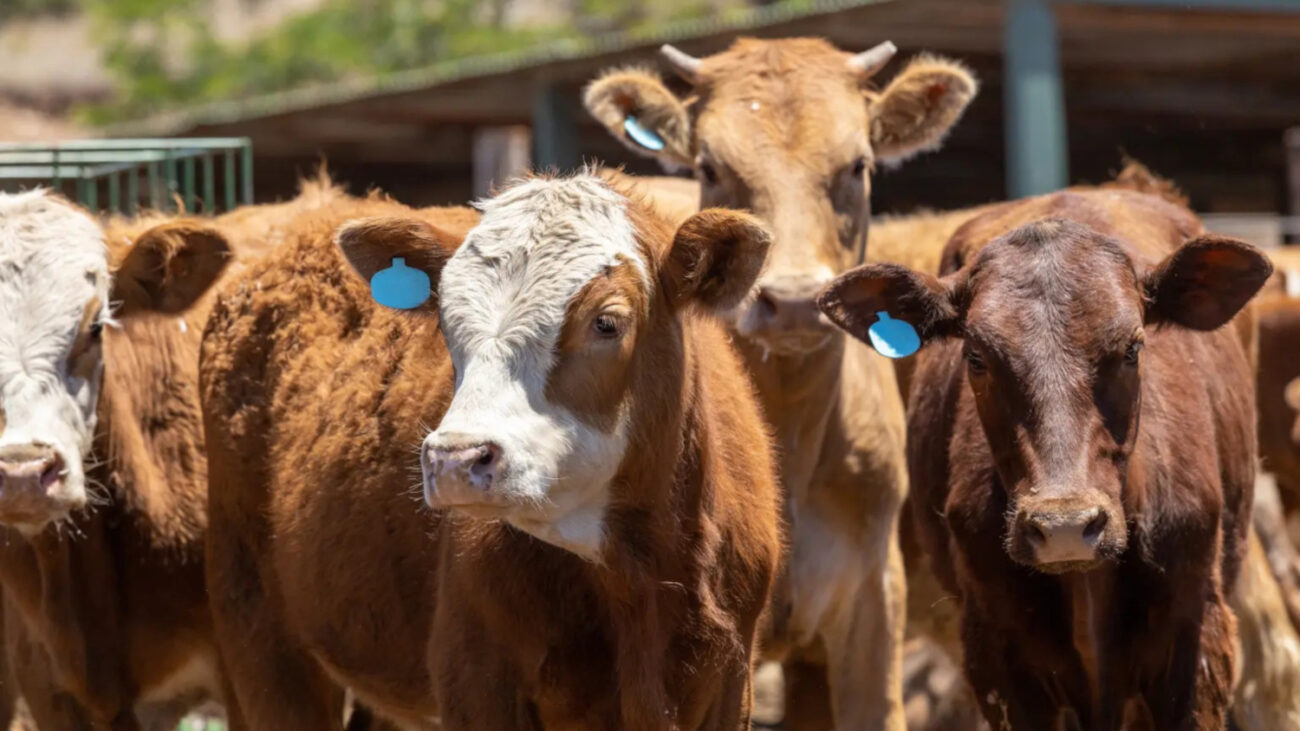
White Oak Pastures, Bluffton, Georgia. Fourth-generation cattle farmer Will Harris says prolonged unprofitability hollowed out the national herd.
From January through July 2026, U.S. commercial beef production totaled roughly 14.4 billion pounds — about 800 million pounds less than the same seven months in 2025, according to USDA data. The beef-cow herd stood at 27.6 million head on January 1, 2026, marking the seventh consecutive year of contraction for the overall cattle inventory. Grocery bills and the structural economics of American ranching are now telling the same story, with consumers facing fewer choices across cuts of steak at the meat counter.
A Herd That Stopped Coming Back
When cattle prices stay unprofitable long enough, farmers don’t just cut back — they sell the animals that would have produced next year’s beef.
That process is called herd liquidation: sell the breeding cows, increase short-term market supply, then face years of reduced output as future calf numbers decline. Will Harris, a fourth-generation cattle farmer and owner of White Oak Pastures in Bluffton, Georgia, watched it unfold from the inside. “Cattle farmers have for so long not made a profit that they have liquidated their herds, and the numbers are just not here anymore,” Harris told Fox News Digital.
The USDA data aligns with his assessment:
- Commercial beef production fell roughly 5.3% year-over-year, January through July 2026 (14.4 billion vs. 15.2 billion pounds)
- Cattle slaughter dropped from approximately 17.5 million head to 16.2 million head in the same window
- July 2026 alone: slaughter down 7% year-over-year; production down 5%
- Total U.S. cattle inventory on January 1, 2026: 86.2 million head — down for the seventh straight year
In past cattle cycles, higher prices generally pulled producers back into the business. Harris says that pattern has stalled this time around. According to Harris, land, livestock, and equipment costs have raised the entry floor so high that many ranchers struggle to justify rebuilding. Retained heifers kept for breeding aren’t available for slaughter — they require years to mature. Recovery, if it comes, plays out over years, not quarters.
Heavier Animals, Thinner Cushion
Fewer cattle don’t automatically mean an equal drop in beef output, but heavier carcass weights offer only a partial buffer against the broader supply decline.
Heavier carcass weights — the dressed weight per animal at slaughter — can partially offset lower slaughter numbers, and USDA’s forecasting accounts for this factor. The buffer remains limited: USDA projects full-year 2026 beef production at 24.967 billion pounds, a 4% year-over-year decline. As domestic output tightens, the U.S. is increasingly relying on imported beef to meet demand. Harris observes that the country is becoming a larger net importer — a shift that would have seemed unlikely to ranchers of an earlier generation.
Short-term feedlot numbers add a layer of nuance. Cattle on feed were up 2% in July 2026 year-over-year, according to USDA. Feedlot inventory and the breeding herd, however, are distinct measurements that signal different things. Feedlot numbers reflect animals approaching slaughter in the near term. Breeding-herd size reflects beef availability years down the line. The longer-term picture remains constrained — and it won’t shift until enough ranchers conclude that the risk and capital required to rebuild are worth taking on again.