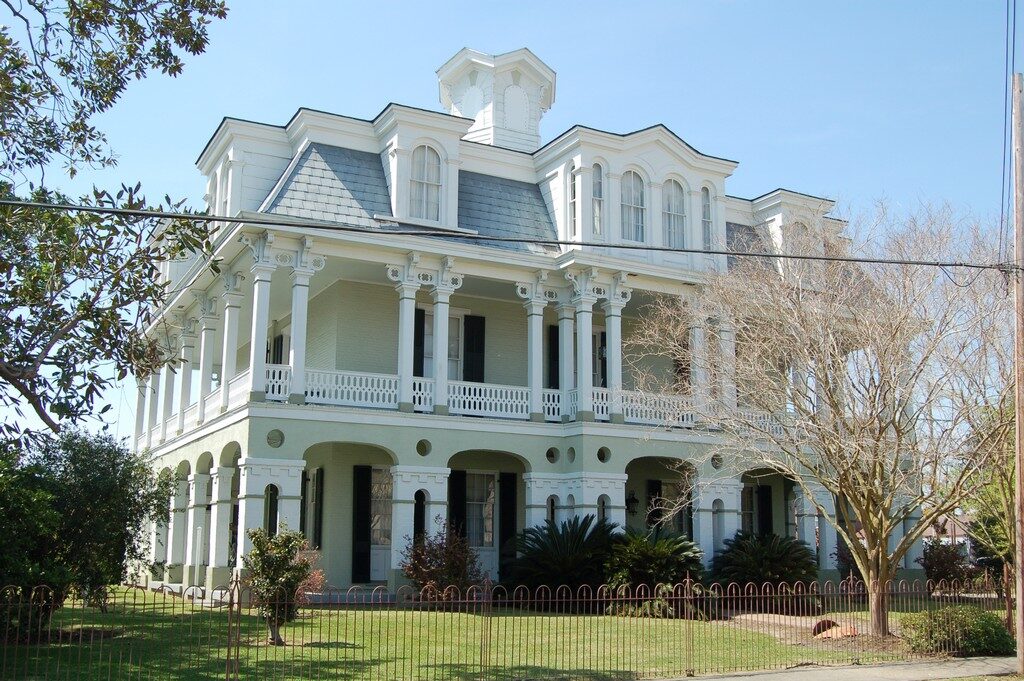


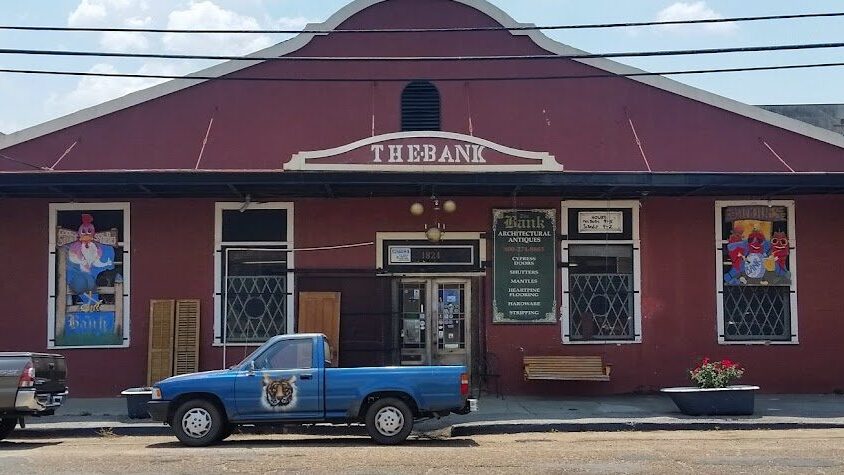
Forty-five thousand square feet of salvaged New Orleans architecture fills a warehouse at 1824 Felicity Street. The Bank Architectural Antiques operates as part museum, part salvage yard, part time capsule of demolished and renovated mansions. This is where cypress doors, cast-iron fences, marble mantels, and cypress beams from 200-year-old houses end up when buildings get torn down or gutted.
The Bank opened in 1998 when owner Paul Maassen started salvaging architectural elements from condemned buildings. He saved materials before demolition crews destroyed them. The collection grew as contractors, demolition companies, and homeowners brought salvaged materials. Now the warehouse holds items from hundreds of properties spanning 1830s-1950s construction.
Walking through The Bank means navigating narrow aisles stacked floor-to-ceiling with doors, shutters, columns, brackets, mantels, gates, and hardware. The organization system is loose. Doors cluster in one section, mantels in another, but cross-contamination happens. Finding specific items requires patience and willingness to dig. That’s part of the experience.
Cypress doors and shutters fill multiple aisles. Cypress was Louisiana’s primary building material before old-growth forests were logged out. The wood is rot-resistant, termite-resistant, and beautiful. Doors date from 1840s-1920s with original hardware, glass panels, and mortise-and-tenon joinery. Shutters have functioning louvers and original paint layers showing decades of color changes. Prices range $200-$2,000 depending on size, condition, and age.
Cast-iron fences, gates, and balcony railings lean against walls throughout the warehouse. New Orleans’ iron comes from local foundries that operated 1840s-1890s. Each foundry had distinctive patterns. Collectors identify foundries by design details. The Bank’s collection includes fence sections, gates, porch columns, and balcony brackets. Prices start around $500 for small pieces, reach $10,000+ for complete fence sections.
Marble mantels from demolished mansions line one wall. Greek Revival, Italianate, and Victorian styles. Hand-carved details, original condition. Some have minor damage, some are pristine. These came from Garden District and Esplanade Avenue houses that were demolished or renovated. Prices $1,500-$8,000.
Heart pine and cypress beams salvaged from demolished buildings stack in back sections. Old-growth timber with tight grain patterns impossible to find in modern lumber. Contractors buy these for restoration projects or new construction wanting authentic materials. Sold by the foot.
The Bank operates as working salvage business, not a museum. Staff is minimal. You browse on your own. Ask questions if you need help but expect limited hand-holding. This is a warehouse where serious restorers, contractors, and collectors shop. Hours are Monday-Friday 9am-5pm, Saturday 10am-4pm. Closed Sunday. Phone: (504) 523-2702.
The warehouse is in Central City between the Lower Garden District and Touro. It’s not walkable from tourist areas. Drive or take a rideshare. Parking is on-site and easy. The neighborhood is residential and industrial mixed.
Tourists visit The Bank to see New Orleans architectural history in physical form. Touching a cypress door from an 1850s mansion connects you to craftsmanship and materials that built the city. The iron, the marble, the cypress all came from buildings that housed real New Orleans families. These aren’t reproductions. This is actual history.
Restorers and contractors shop here for authentic materials to repair historic houses. Finding a door that matches your 1880s house is easier at The Bank than ordering reproductions. The materials are period-correct, properly dimensioned, and authentic.
Prices reflect rarity and condition. Common items like standard doors cost less. Unique pieces like carved mantels or complete iron fence sections cost more. Everything is negotiable. Make an offer if prices seem high.
The Bank ships nationwide for customers renovating historic properties elsewhere. The majority of business is local contractors and homeowners. Out-of-town visitors browse more than buy because shipping large architectural elements is expensive and complicated.
Bring measurements if you’re shopping for specific items. Bring cash for better negotiating. Bring patience for browsing. The warehouse rewards exploration. The best pieces hide behind common items. Serious shoppers spend hours here.