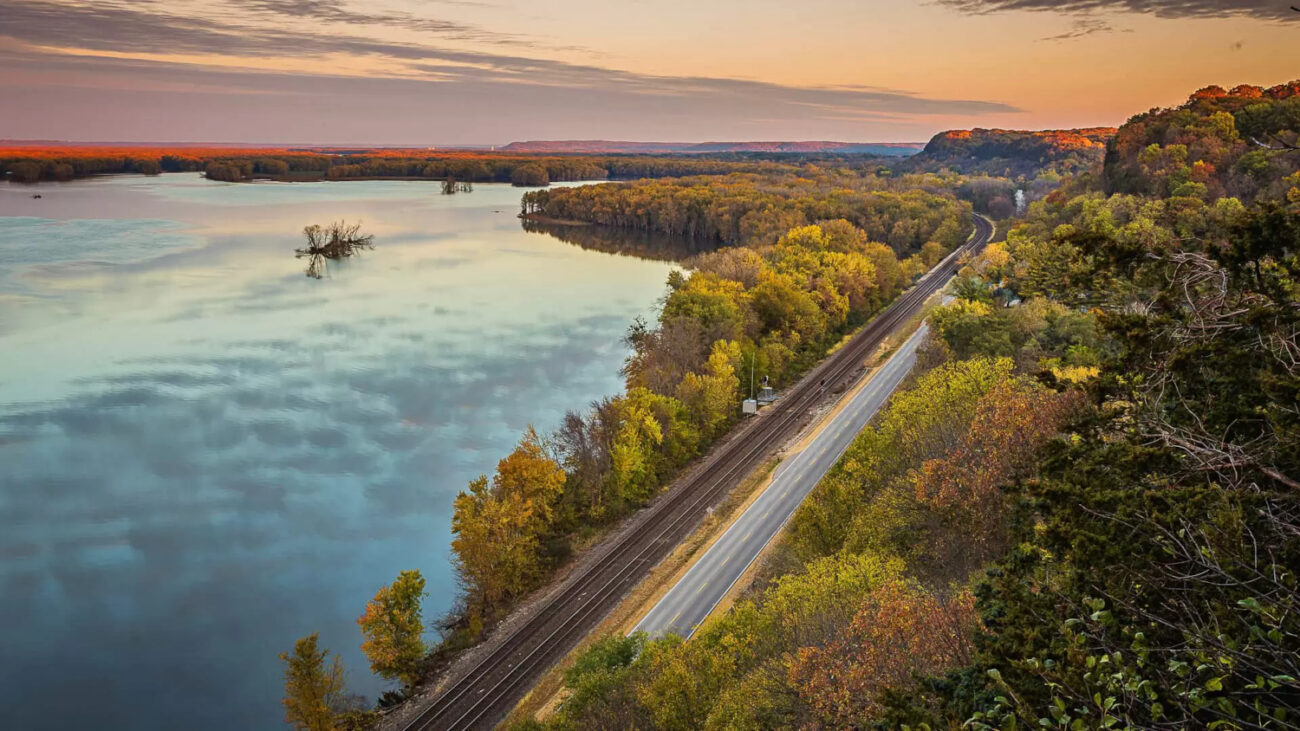


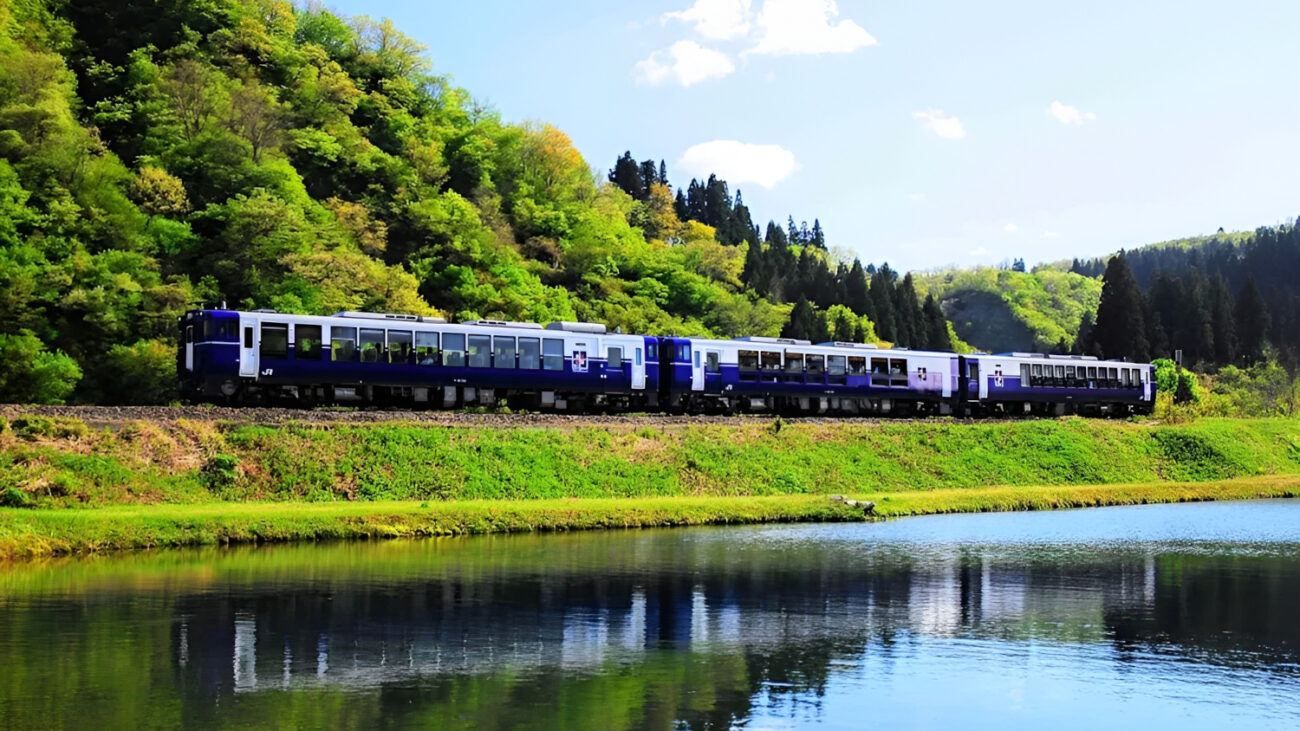
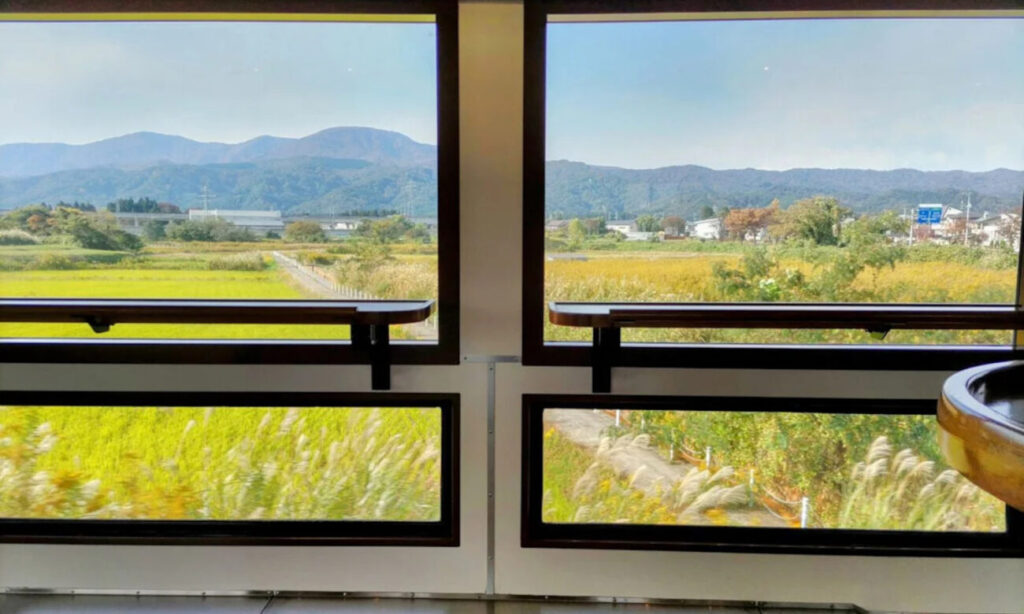
A cold pour of daiginjo, rice paddies blurring green beyond the glass, the Sea of Japan about to appear around a coastal bend — this is the Koshino Shu*Kura, JR East’s sake-themed sightseeing train threading through Niigata Prefecture from March through November. Niigata earns its brewing reputation honestly: premium Koshihikari rice, abundant snowmelt, and a tradition deep enough to make the region’s sake a category of its own. The train doesn’t just pass through that landscape. It bottles it.
Three Cars, Three Purposes
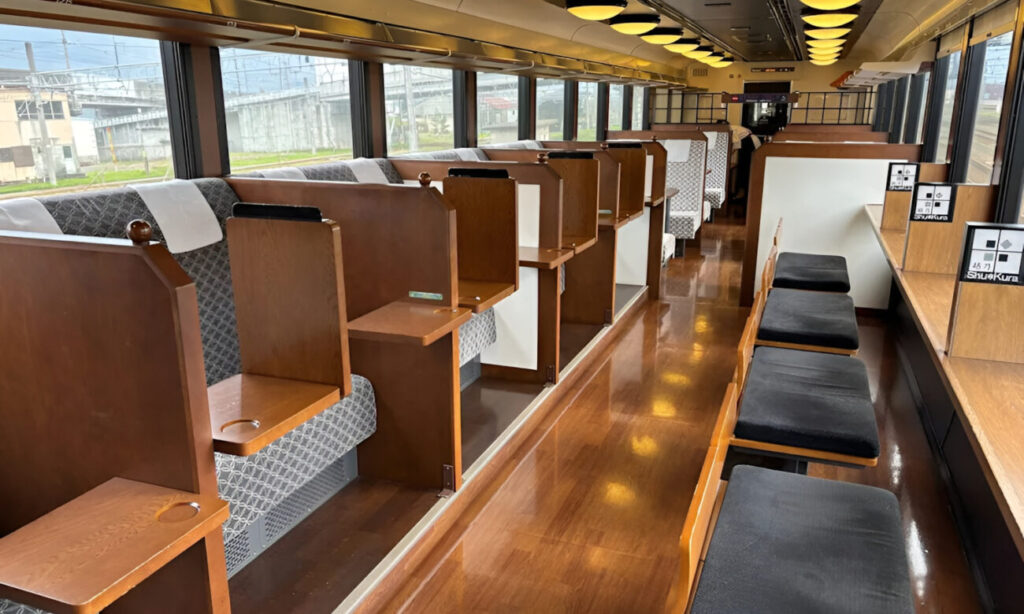
The interior works like a well-designed restaurant — each car has a distinct role, and none of them overlap carelessly.
- Car 1 holds the seasonal meal packages, booked separately from standard seats.
- Car 2 is the tasting corner: five selected Niigata sake brands, local snacks, and merchandise.
- Car 3 offers standard reserved seating and lounge space.
Worth noting is the exclusive onboard sake — the Koshino Shu*Kura Original Daiginjo, produced in collaboration with Kiminoi Brewery and reportedly made using the yamahai fermentation method. That’s not a novelty item. That’s a culinary program with genuine intent behind it.
Pick Your Endpoint Before You Board
Three routes depart from Jōetsumyōkō — your destination shapes everything that comes after the ride ends.
- Koshino Shu*Kura to Tōkamachi: rice-paddy scenery, the Bijin-bayashi beech grove, and Kiyotsu Gorge art installations associated with the Echigo-Tsumari Art Field
- Yuzawa Shu*Kura to Echigo-Yuzawa: onsen town, Ponshukan sake sampling hall, sake-infused bath, and a town linked to the setting of Kawabata’s Snow Country
- Ryuto Shu*Kura to Niigata City: a second Ponshukan, Pia Bandai waterfront market, seafood, and Koshihikari rice products
The Ride Itself Earns Its Place
Omigawa Station briefly stops the clock — just long enough to see the ocean and remember why slow travel still matters.
At Omigawa, described by regional tourism sources as one of Japan’s closest railway stations to the sea, the train pauses and passengers can reportedly disembark for a few minutes. The Sea of Japan quiet lasts just long enough for a photograph before you’re back onboard.
Seasonal menus in Car 1 rotate with the calendar. Reported examples from past menus include clam and rapeseed-flower gratin, cherry-blossom water yokan, fried sweet shrimp, bitter melon stuffed with meat, and edamame-and-corn snacks — specific, regional cooking rather than decorative garnish. According to Travel + Leisure, service runs primarily on Fridays, weekends, and holidays, with the most frequent departures between May and August.
Standard seats book through JR-EAST Train Reservation, with availability opening one month before departure. Car 1 meal packages require separate travel-package reservations and carry different booking deadlines — confirm both directly through JR East before planning your trip.
Plan Ahead, Then Board
Niigata, bottled and set in motion — but only if you secure your seat early.
This is not a commuter train with a sake cart attached. Pick the route that matches your appetite — art and gorges, onsen and tasting halls, or waterfront markets — reserve as early as schedules allow, and let the prefecture come to you.