

New Orleans doesn’t have one architectural vocabulary. The French Quarter runs on Spanish Colonial bones. The Seventh Ward follows Creole conventions. The Garden District is Anglo antebellum ambition — wide lots, classical columns, houses built to be seen. These three destinations let you go inside the city’s structural history rather than observe it from the sidewalk.
Commander’s Palace – 1403 Washington Ave., Garden District
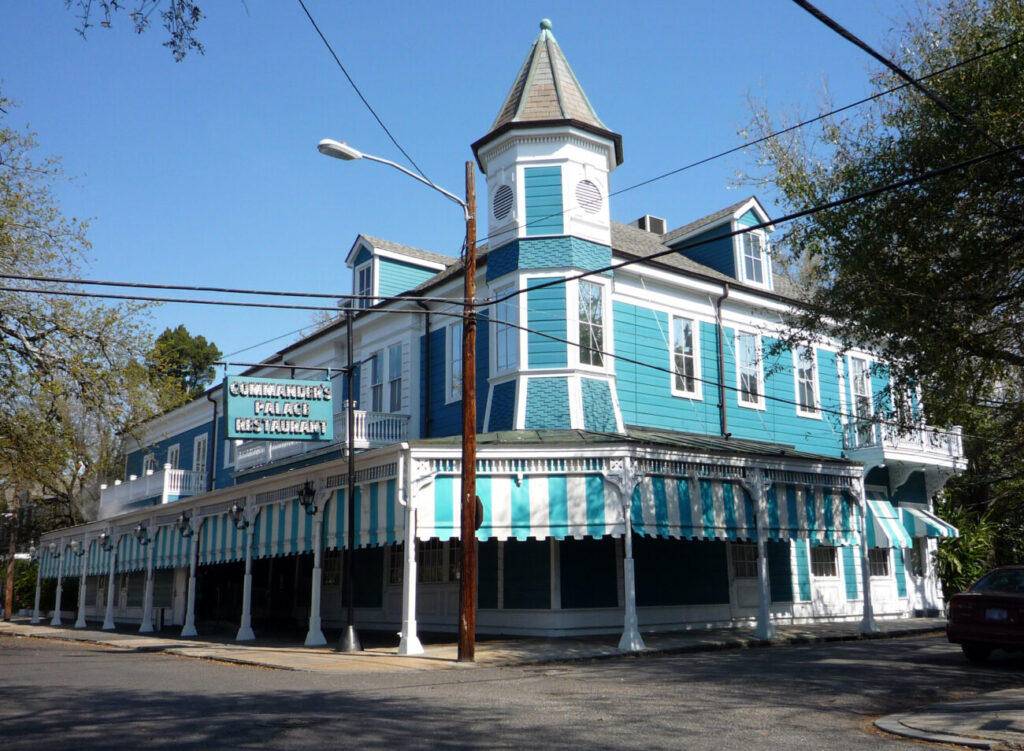
The building started as a saloon in January 1893, opened by Emile Commander, son of an Italian immigrant from Ustica. He followed the fashionable architectural conventions of his Garden District neighbors: a Victorian “Painted Lady” design with a hexagonal corner tower, broad verandas, and gingerbread detailing. The Brennan family bought it in 1969 and repainted the exterior in the specific shade now known as “Commander’s Blue,” a turquoise that reads as boldly institutional from Washington Avenue.
Their 1970s renovation replaced solid walls with glass, opened the building toward its central courtyard, and installed custom trellises that blur the line between interior and exterior. The upstairs Garden Room — the most popular among locals — sits inside the canopy of a live oak that predates the building, visible from the courtyard below. The dining room layout across multiple floors reflects 130 years of expansion into adjacent structures. The building itself is the experience.
Reserve via commanderspalace.com; jacket preferred for gentlemen, closed-toed shoes required.
The Degas House – 2306 Esplanade Ave., Seventh Ward
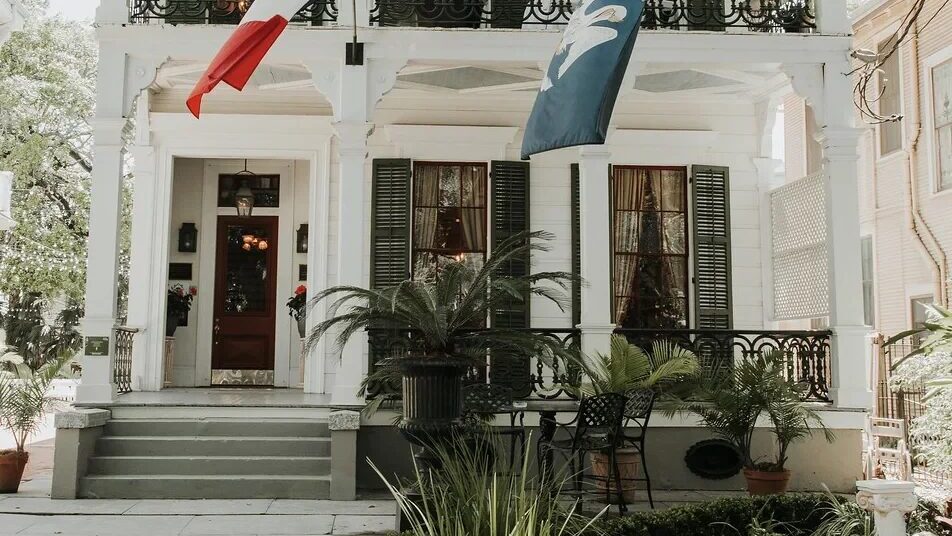
A geography note first: this house is on Esplanade Avenue in the Seventh Ward, not the Garden District. Esplanade was the grand residential boulevard of French Creole New Orleans, lined with Greek Revival and Italianate townhouses built in the decades before and after the Civil War. The Musson house at 2306 is a large Creole mansion from the 1850s, home to Edgar Degas’ maternal uncle Michel Musson when Degas arrived from Paris in fall 1872.
Degas spent five months here, worrying about his failing eyesight while producing 18 paintings of his Creole relatives and the city around him. His most important American work, “A Cotton Office in New Orleans,” was completed in this house and became the only painting sold to a museum during his lifetime. It is now the only Degas home or studio open to the public anywhere in the world.
Tours are led by his great-grandnieces daily at 10:30 a.m. and 1:45 p.m. by reservation. Book at degashouse.com or call (504) 821-5009.
Lafayette Cemetery No. 1 – Washington Ave. between Prytania and Coliseum, Garden District
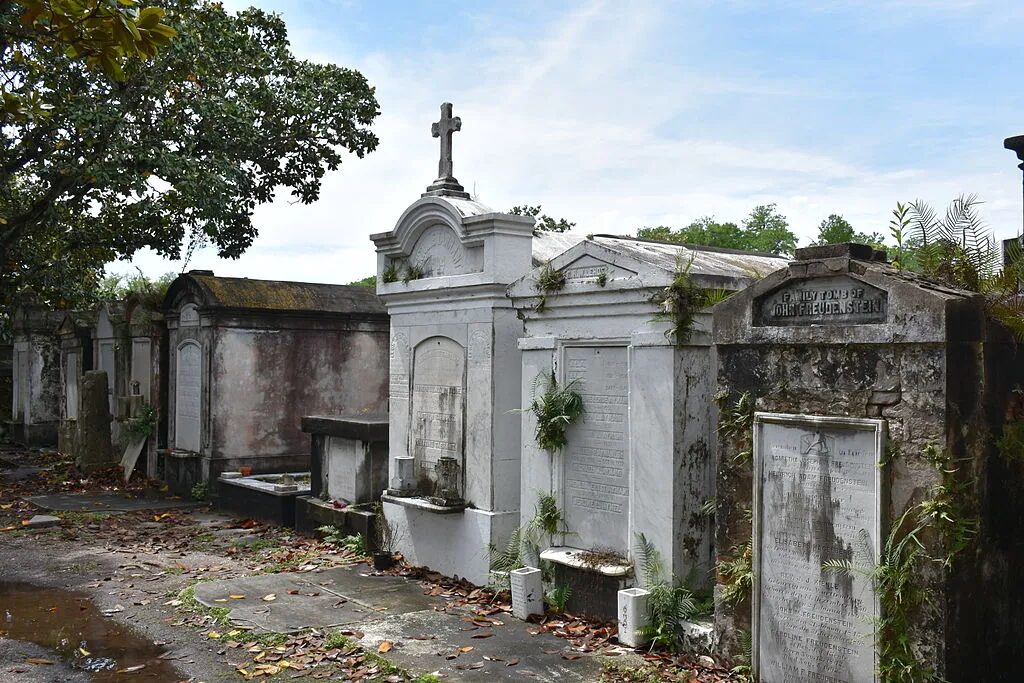
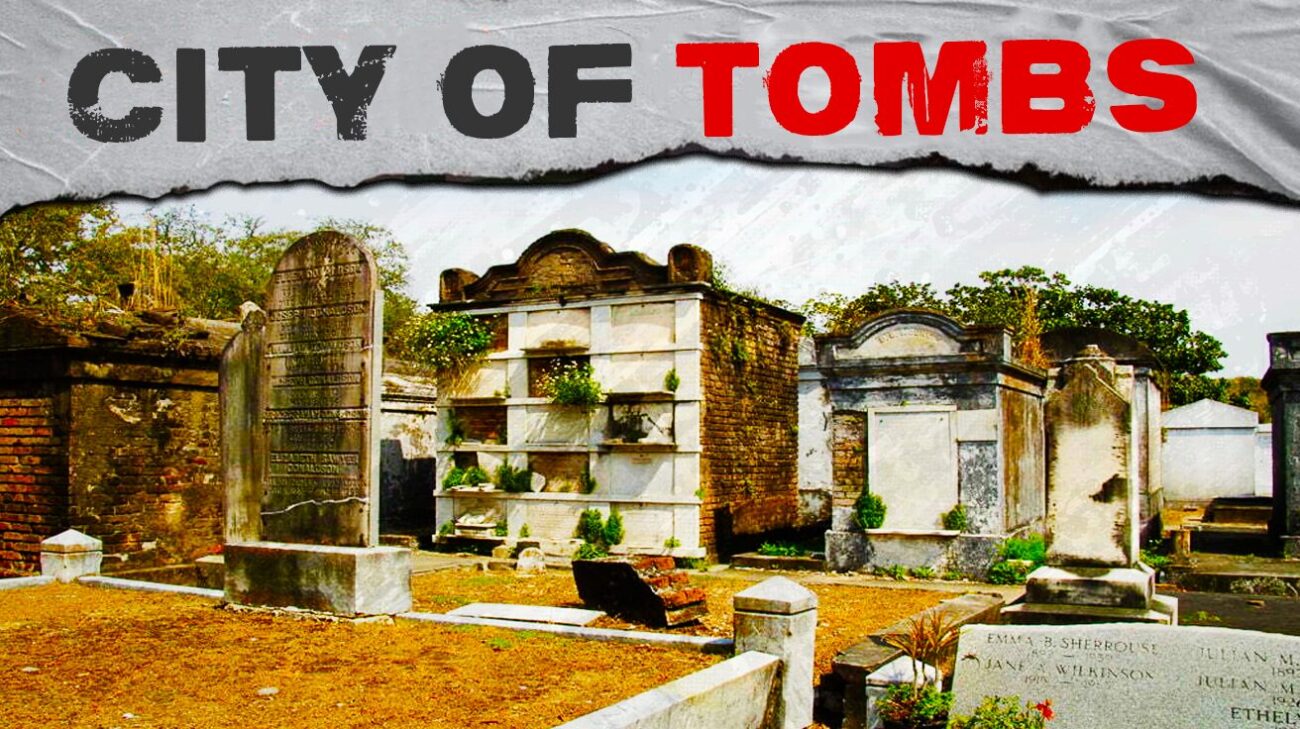
Founded in 1833, Lafayette is the oldest of New Orleans’ seven municipal cemeteries and the first designed with a formal plan. Surveyor Benjamin Buisson laid it out in a cruciform pattern: two center aisles crossing at right angles, originally paved with shells, to accommodate funeral processions. Named for the City of Lafayette, the Anglo-American suburb annexed into New Orleans in 1852, it holds approximately 1,100 family tombs and 7,000 people within a single city block.
The 496 wall vaults running along Washington Avenue served working-class Irish and German immigrant families as the most affordable burial option of the era. Family tombs in the interior range from simple brick structures to elaborate cast-iron and marble constructions that track architectural fashions across each decade. Anne Rice set several Mayfair Witches scenes here and once rode through the cemetery in a glass-enclosed coffin for a book launch.
One practical note: the City of New Orleans closed the cemetery to visitors in September 2019 for repairs, and it remains closed as of early 2026. Check current status at saveourcemeteries.org before visiting.