

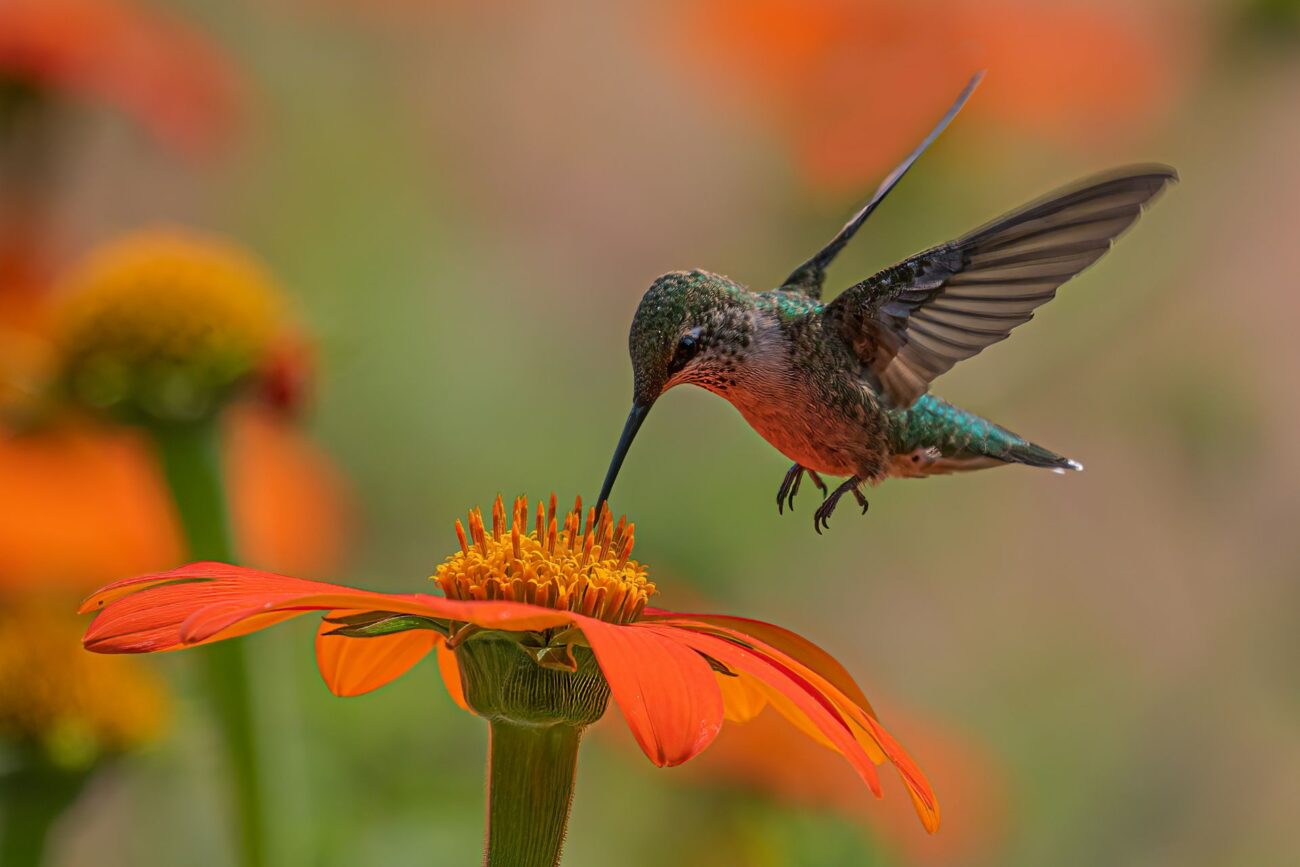
You fly 500 miles across the Gulf of Mexico without stopping. You’re three inches tall and weigh less than a nickel. Your wings beat 53 times per second and your energy reserves are gone.
Then you spot it — a patch of coastal woods rising from the Louisiana shoreline. You drop down into the live oaks at Peveto Woods Bird and Butterfly Sanctuary and start feeding like your life depends on it. Because it does.
This 40-acre sanctuary in Cameron Parish sits directly in the center of the Trans-Gulf migration path. Every spring from mid-March through May, up to 2 million birds use this little patch of coastal woodland as their first stop after crossing open water. Ruby-throated hummingbirds arrive exhausted and famished. They’re so focused on refueling that they barely notice the humans standing there with binoculars.
The sanctuary is what early French settlers called a chenier, which translates to “oak place.” These ancient beach ridges formed through wave action and Mississippi River currents. They’re rare. Most of them only exist along the Louisiana coast. Peveto Woods is one of the last ones standing.
Walk the trails here, and you’re stepping through live oak canopies hundreds of years old. Mulberry trees and hackberry trees line the paths. Spring wildflowers bloom across the forest floor. The whole place feels alive with movement — warblers darting between branches, tanagers flashing red against green leaves, orioles singing from the treetops.
The trails twist and wind through dense brush. Some paths dead-end without warning. Others loop back on themselves. You’ll find benches under the oaks where you can sit and watch. A guest book near the entrance lets you record what you saw. The whole trail system takes about five minutes to walk if you’re rushing, but nobody rushes here.
Scientists from the University of Southern Mississippi have used Peveto Woods for songbird migration research since 1984. Their findings confirm what birders already knew — without coastal woodlands like this, songbirds heading north to breed in the U.S. and Canada might not survive the journey.
The sanctuary opens at dawn and stays open until dusk. Free admission. No staff on site. You’ll find a few picnic tables, a pavilion for shade, and a port-o-let. Bring bug spray. Pack out your trash, because there’s no pickup. Leave your dog at home, too; they’re not allowed on the trails.
Getting there requires a drive. Head south on Highway 27 from I-10 at Sulphur until you hit Highway 82 at Holly Beach. Turn right and go west 8.5 miles. Look for the Baton Rouge Audubon Society sanctuary sign on your left.
The closest lodging is in Sulphur, about 45 minutes north.
The sanctuary is unmanned and isolated, and that’s the point. This place exists for the birds first.
Time your visit right, and you’ll witness something remarkable — tiny hummingbirds that just flew from Mexico’s Yucatan Peninsula, landing in Louisiana trees to rest before pushing north. Three-inch miracles completing an 800-mile journey. All of them stopping here because this patch of coastal woods survived when others didn’t.
Peveto Woods Bird and Butterfly Sanctuary Highway 82, Johnson Bayou (8.5 miles west of Holly Beach).
Open daily dawn to dusk, free admission.