


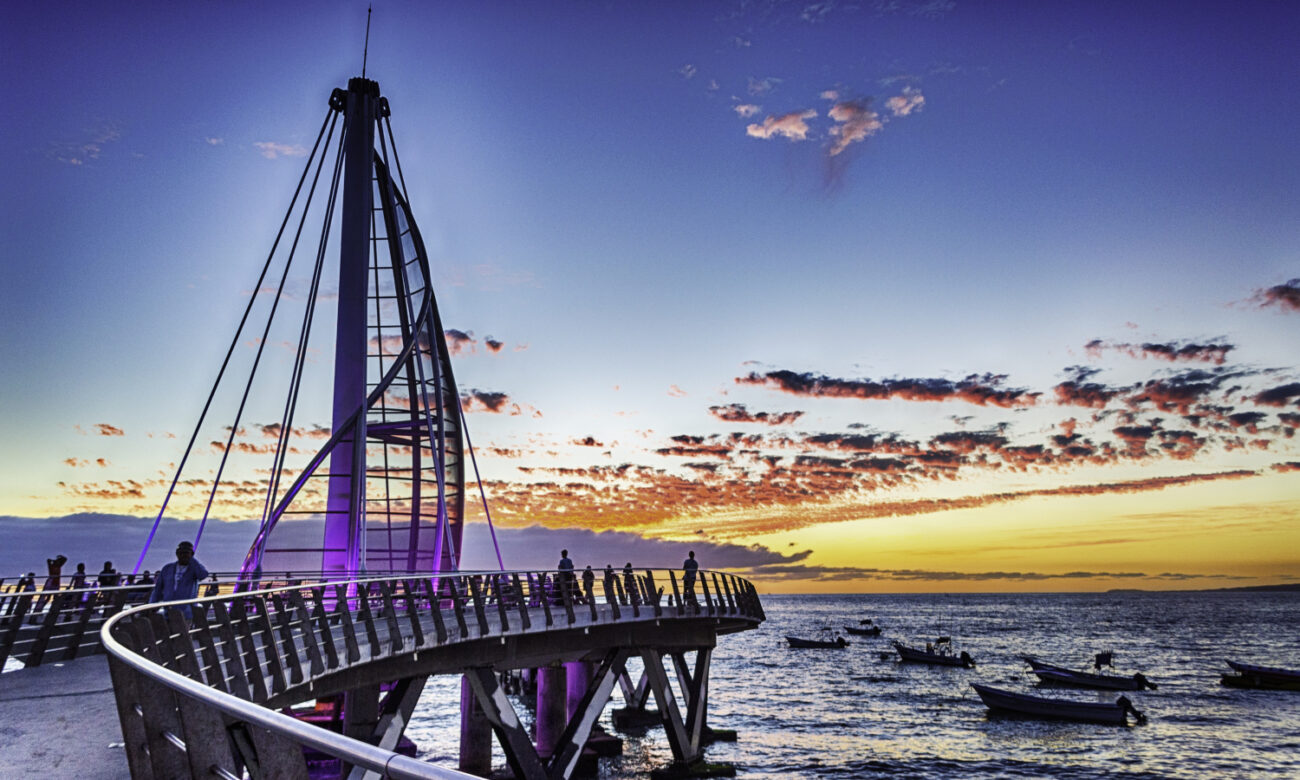
You’ve landed at Puerto Vallarta International Airport. Hotel booked in Nuevo Nayarit, roughly 8 kilometers away. Whale-watching tour confirmed for 7 AM. Somewhere in transit, your phone may have silently switched time zones. The itinerary says 7 AM; the screen now reads 6 AM — and the marina is 20 minutes away.
Here’s the geography. Puerto Vallarta sits in Jalisco. Cross the Ameca River and you’re in Nayarit — but specifically in the municipality of Bahía de Banderas, which uses Central Time, the same as Puerto Vallarta. The confusion only surfaces when you venture farther north or inland: Tepic, Compostela, Guayabitos, San Blas. Those areas follow Pacific Time — a full hour behind. Mexico ended seasonal clock changes in most of the country in 2022, so for the resort corridor this is a fixed geographic boundary issue, not a temporary clock-change problem. It catches first-timers off guard every season.
Before confirming any reservation, keep these in mind:
- Bahía de Banderas — including Nuevo Nayarit, Bucerías, Punta Mita, Sayulita and San Pancho — uses Central Time, not Pacific.
- Puerto Vallarta (Jalisco) also runs Central Time, so the bay corridor stays aligned — until you travel farther into Nayarit.
- This is a permanent geographic boundary distinction, not a seasonal shift.
- Phones on automatic time-zone detection may switch unexpectedly; confirm the displayed local time with a hotel concierge or trusted local source before any boat departure, restaurant booking or airport transfer.
Worth Every Complicated Minute
Banderas Bay rewards the prepared traveler — from humpback whales in winter to Sayulita surf culture and a Puerto Vallarta Malecón dinner scene worth staying up for.
Missed boat tours, lost restaurant reservations, a late airport transfer — these are the possible consequences of a phone quietly misreading the local time. The practical fix: check your device’s displayed time against a local source on arrival and confirm meeting times directly with tour operators. Humpback whale-watching in Banderas Bay runs roughly December through late March, according to Nayarit Tourism — though the official 2025–26 season ran December 8 through March 23, and dates vary annually. Sea-turtle nesting and hatchling-release programs are associated with the late-summer and autumn period; participation should be limited to organized conservation programs. Many departures have fixed meeting times, so verifying schedules with each operator matters.
On logistics and safety: the U.S. State Department lists Puerto Vallarta and neighboring Riviera Nayarit without specific travel restrictions, while advising increased caution in the wider state of Nayarit due to crime and terrorism risks. Authorized transportation, prearranged airport transfers and current awareness of local advisories are standard precautions. Entry requirements vary by nationality and circumstances — verify current rules with Mexico’s Instituto Nacional de Migración before departure, as they can change.
The destination more than repays the preparation. Banderas Bay offers:
- Humpback whale excursions
- Marietas Islands snorkeling
- Sayulita surf and street food
- A Puerto Vallarta Malecón dinner scene stretching from fish tacos to full sit-down meals
A workable loop moves through the PV historic center, a Nuevo Nayarit resort base, Sayulita or San Pancho, then Punta Mita — no international border crossings required. Just confirm which time zone each stop sits in, and set that alarm manually the night before that sunrise boat.